
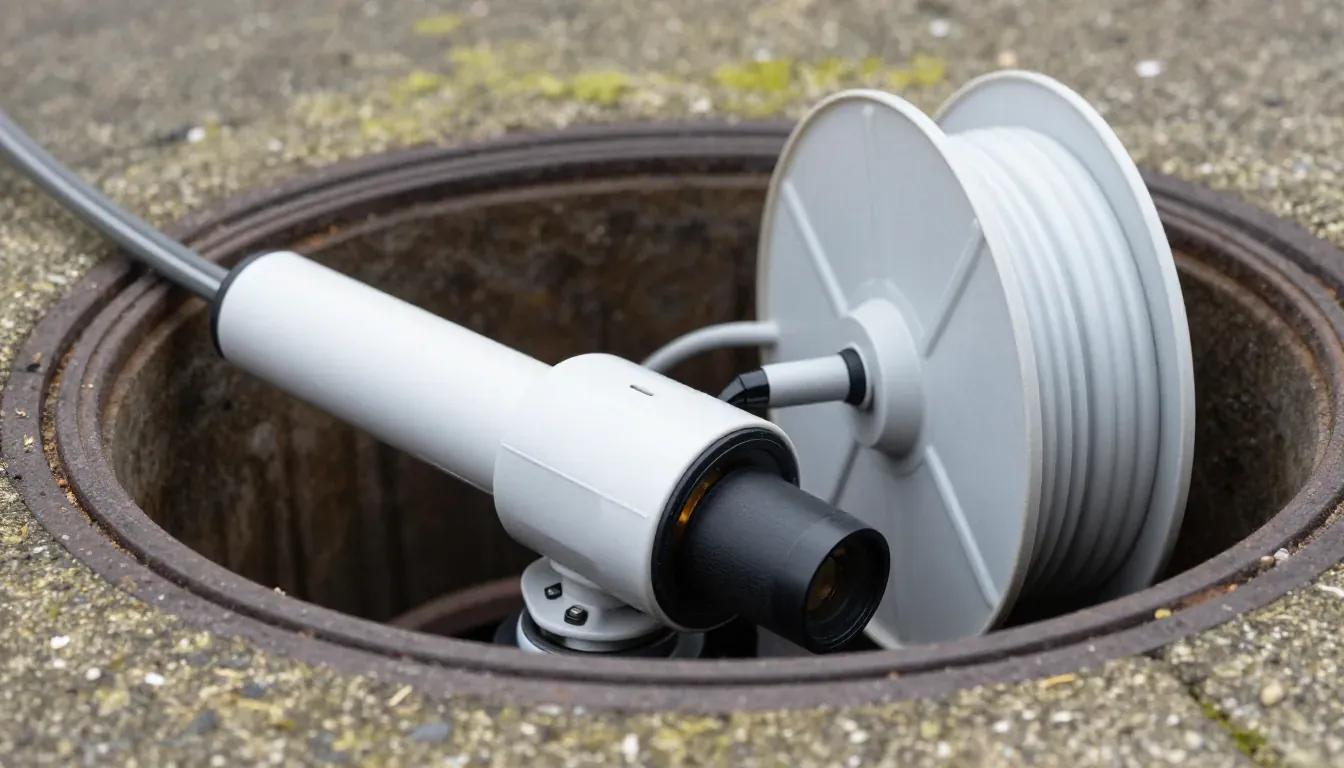
You cannot see a drain, so it is hard to know what is wrong when something fails. A CCTV drain survey solves that problem. A small camera travels through the pipe and shows the engineer what is really there. As a result, repairs target the real fault instead of a guess.
How a CCTV Drain Survey Works
An engineer feeds a waterproof camera on a flexible cable into the drain. The camera lights the pipe and sends live footage to a screen. The engineer watches as the camera moves along the run.
The camera head is small, so it fits most domestic pipes. No digging is needed for most surveys. The camera enters through a manhole, a gully or an inspection point. Because of this, a survey is usually quick and causes little disruption. For example, a typical house drain can often be checked without moving any furniture.
What the Camera Can Show
The footage reveals the condition of the pipe from the inside. It also shows how the pipe changes direction and where branches join the main run. Common findings include:
- Blockages, such as fat, wipes or compacted debris
- Tree roots growing through joints
- Cracks, breaks and collapsed sections
- Displaced or sagging joints
- Scale and build-up on the pipe walls
- Wrong or poorly made connections
- Standing water that suggests a dip in the pipe
The camera also shows where each fault sits. Therefore, any repair can focus on exactly the right spot. That detail turns a guess into a plan.
What You Get Afterwards
After the survey, you can review the footage with the engineer. They explain what they saw and what it means. However, ask questions if anything is unclear, since the footage can look odd at first. Where useful, you also receive a written summary of the findings.
This record is helpful in several ways. You can use it to decide on repairs, to compare quotes, or to show neighbours where a shared pipe is failing. Our post on who is responsible for tenement drains explains why that evidence matters in shared buildings.
When to Book a Survey
Many people think surveys are only for home buyers. If you are buying, our guide on CCTV drain surveys for home buyers covers that in detail. However, there are plenty of other good reasons to book one. For example:
- A blockage keeps coming back after clearing.
- You notice a damp patch, a smell or a sunken area in the garden.
- Water drains slowly in more than one place.
- A drain floods after heavy rain.
- You plan building work, such as an extension, near a drain line.
- You want to check a repair or relining job.
In each case, the survey finds the cause instead of treating the symptom. That matters, because clearing the same blockage again and again wastes money.
Surveys Before and After Other Work
A survey is a useful first step before any repair. It shows whether the pipe needs drain repairs or just a clean. It can also show whether the pipe suits lining or needs excavation, since the shape of the pipe matters, which we cover in our guide to pipe relining and excavation.
After drain jetting, a second look shows how clean the pipe is. That check confirms the work was effective, because you can see the clean pipe. It also gives a clear picture of the pipe for future reference.
Book a Survey With Our Team
Our CCTV drain surveys are available across our area. Our drainage engineers in Aberdeen carry out surveys in houses, flats and commercial buildings. Whether the property is a new estate home or an older farmhouse, we also work in Westhill and Ellon.
If you are unsure what is happening in your drain, our guide to the signs of a blocked drain is a good place to start. We use fixed pricing and charge no call-out fee. Request a free quote online through our contact page.


