
When a drain is cracked or broken, you have two main choices. You can dig it up and replace the pipe, or you can repair it from the inside. Each option has a place, so this guide explains how they compare. However, the right choice depends on the pipe, not on a fixed rule.
What Is Pipe Relining?
Relining is a no-dig repair. A flexible liner soaked in resin is pulled or inverted into the damaged pipe. Once it is in place, an inflated tube presses it against the pipe wall while it hardens.
The result is a new pipe surface inside the old one. It seals cracks and joints and can stop roots getting in. Access usually comes from an existing manhole or a small opening, so the garden stays largely intact. For example, a lawn above the pipe can stay as it is.
What Is Excavation?
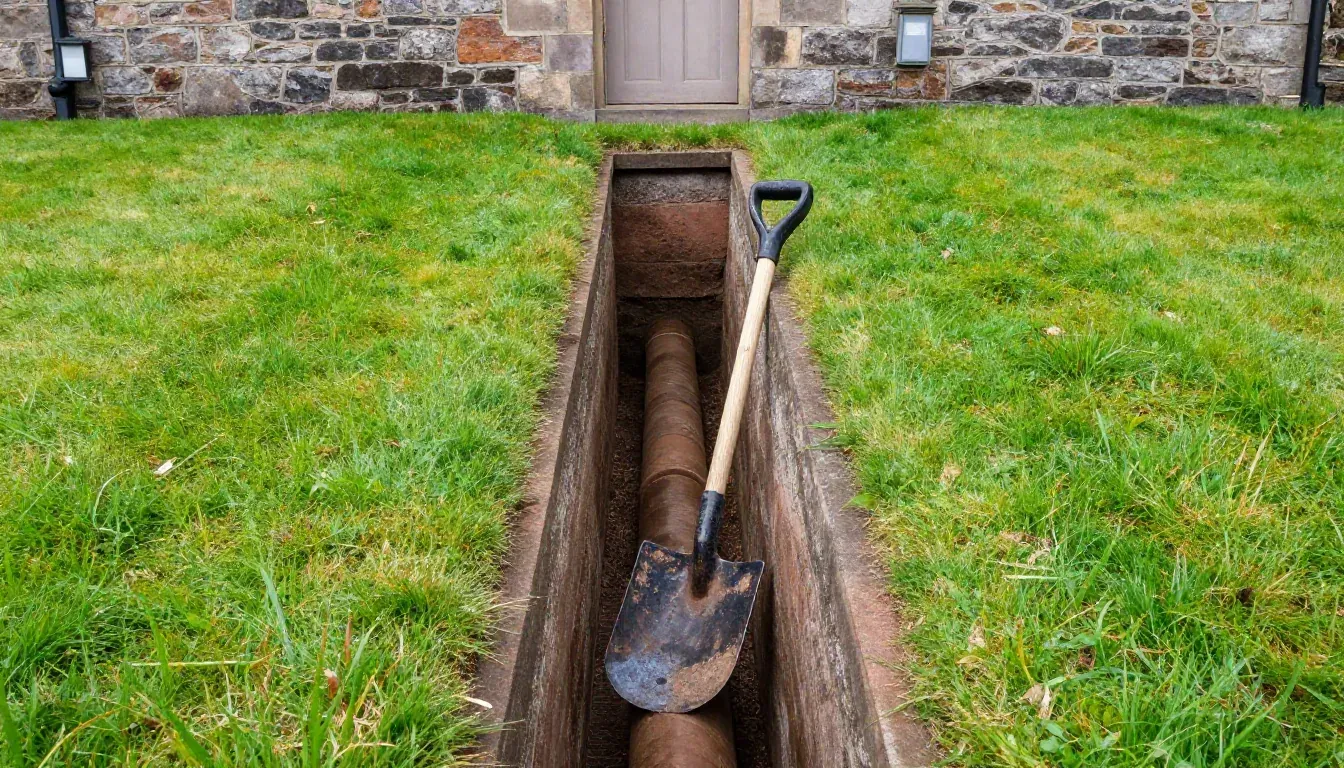
Excavation means digging down to the pipe, removing the damaged section and fitting a new one. It is the traditional method, and engineers have used it for generations. Crews then backfill the trench and reinstate the surface.
Digging lets the engineer see the whole pipe and the ground around it. That is valuable because it handles serious problems, such as a pipe that needs a new route or gradient. Our drain repairs team uses this approach when it is the right answer.
Why No-Dig Suits Aberdeen
Aberdeen is known for its granite buildings, and many streets, driveways and paths are built to match. Granite setts, flagged paths and mature gardens are hard to lift and relay neatly. A trench through them means lifting, storing and replacing stone. Therefore, matching the finish afterwards can be tricky.
Relining avoids much of that work. It leaves paving, lawns and planting alone, which is a real advantage in a tidy garden or a shared back green. Our post on tenement drain responsibility explains why shared drains under common ground are often awkward to dig.
When Relining Is the Better Choice
However, relining often suits drains that are structurally sound but cracked, leaking or invaded by roots. It also helps when the pipe runs under a patio, a driveway, a conservatory or a building. In those cases, digging would cost time and cause disruption, while relining avoids both.
Choose relining when:
- The pipe is still in line and mostly intact.
- Roots or cracks cause repeat blockages.
- The pipe is deep or sits under hard surfacing.
- You want to protect a garden or paving.
When Excavation Is the Better Choice
Excavation is the better option when the pipe has collapsed or when sections have shifted out of line. A liner needs a pipe that is still open. Since a badly crushed pipe cannot take one, it may need replacing. The same applies when the pipe has a serious dip, because a liner cannot fix the fall.
Digging also makes sense when the pipe needs to be rerouted. In new building work, for instance, it may be easier to replace the run at the same time. A survey will show which method suits your drain.
Start With a Survey
Before choosing, you need to see inside the pipe, because the choice depends on what is there. Our guide to what a CCTV drain survey shows explains how that works. The footage shows the damage, the pipe's shape and any obstacles.
Next, the pipe needs to be clean, since a liner will not bond to debris. Drain jetting clears debris and scale before a liner goes in. If you want a cost overview, see our post on what affects drain unblocking cost, as many of the same factors apply to repairs.
Local Advice on Repairs
We cover Banchory, Stonehaven and Dyce, where garden and driveway layouts vary a lot. Our drainage engineers in Banchory, our Stonehaven team and our Dyce crew will tell you honestly which method fits.
We use fixed pricing and charge no call-out fee. Request a free quote online through our contact page, and we will explain the options for your pipe.


