
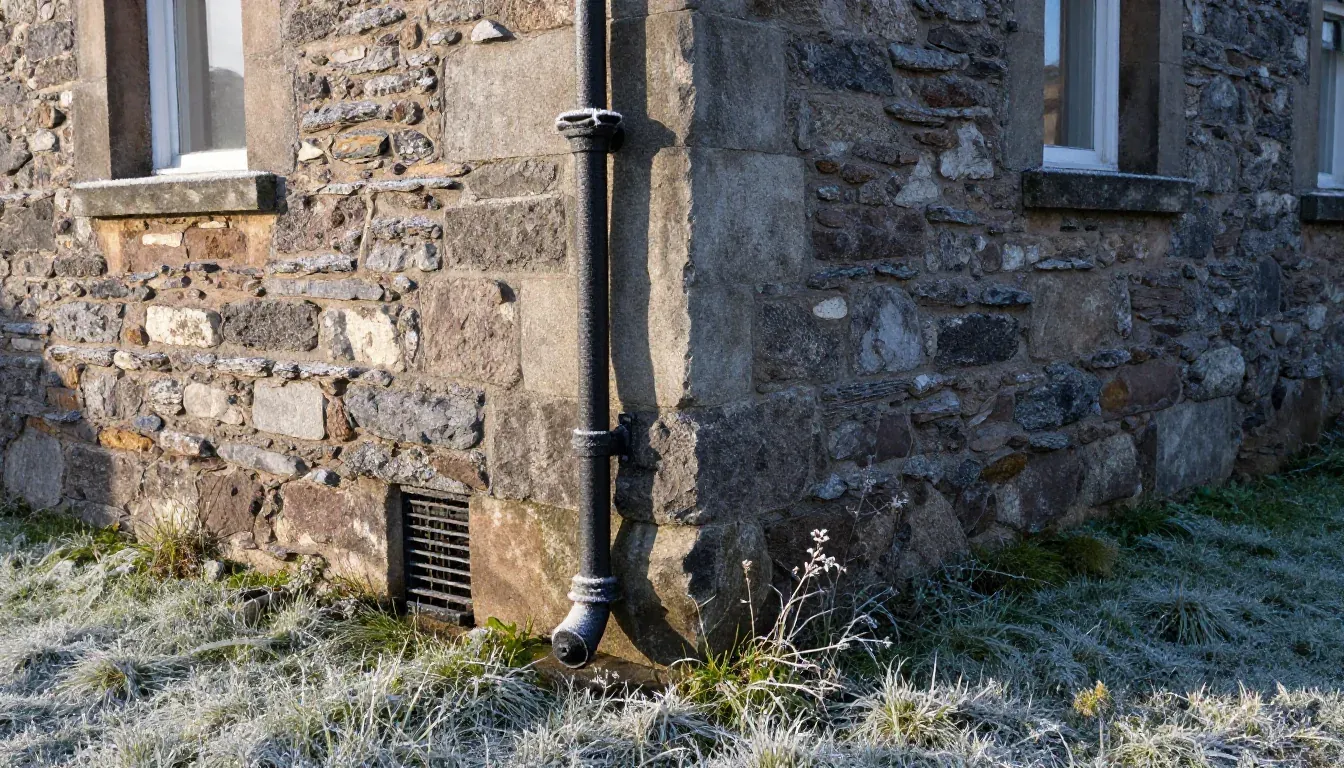
Winter is hard on drains in Aberdeenshire. Freezing nights, wet leaves and heavy cooking all add strain. A little care in autumn can save you a cold, messy call-out in January. However, you only need a few simple habits.
Frozen Condensate and Waste Pipes
Condensing boilers make a small amount of acidic water. It leaves through a plastic condensate pipe, often on an outside wall. In a hard freeze, that water can freeze in the pipe and block it.
A blocked condensate pipe can stop the boiler working, because the boiler shuts itself down to stay safe. Waste pipes from sinks, washing machines and showers can also freeze if they run outside or through a cold space. Pipes that are exposed and uninsulated are most at risk. For example, a long outside run on a north wall freezes first.
Before the Freeze: Simple Prevention
You can reduce the risk with a few easy steps. For example:
- Insulate exposed waste and condensate pipes where you can reach them.
- Check that outside pipes slope so water drains away.
- Fix dripping taps and leaking joints before the cold arrives.
- Keep the heating on low in empty rooms, such as a spare room or garage.
- Know where your stopcock is, in case you need to turn the water off.
If your boiler has a condensate pipe outside, ask a heating engineer about a larger-bore or shorter run. That is a job for them, not for a drainage team. However, we can help if the waste pipe itself blocks.
Fat and Grease in Cold Weather
Fat and grease are a problem all year, but cold makes them worse. Hot grease that goes down the sink cools and sets inside the pipe. In winter, the pipes are colder, so it sets faster. Grease then clings near the start of the pipe, where it narrows the bore.
Festive cooking makes this a bigger risk, since roast dinners create a lot of fat. Wipe pans with kitchen paper before washing them, and bin the fat. Our guide on preventing blocked drains in the kitchen has more tips. Our post on what affects drain unblocking cost explains how we price a clearance. If a build-up has already formed, drain jetting removes it from the pipe walls.
Leaves, Grit and Gullies
Autumn leaves do not stop falling when November ends. Wet leaves, moss and grit collect in gullies and around drain covers. Gritting also adds sand and stones that wash into drains. As a result, gullies fill faster in a cold spell.
Clear gullies and gutters regularly, and wear gloves. Check that grates are not buried under leaves or snow. A clear gully helps water drain away when thaw or rain arrives, which matters in a wet spell. Our guide to blocked drains after heavy rain explains what happens when they fail.
What to Do After a Freeze
If a pipe has frozen, never use a naked flame or boiling water on it. Boiling water can crack cold plastic or old pipes. Instead, warm it gently with a hot water bottle or a warm cloth, and open the nearest tap to relieve pressure.
Once the pipe thaws, check for leaks and cracks. A frozen pipe can split without showing at first, so check again after a day. Look for dripping, damp patches or water that drains slowly. Our guide to the signs of a blocked drain lists what to watch for.
When to Call for Help
However, call us if a drain stays blocked after a thaw, or if waste backs up into your home. Our blocked drains service finds the cause, and our emergency drain service is on call 24/7. For advice on what to do while you wait, read our post on emergency drain problems.
We serve Inverurie, Peterhead and Portlethen, among many other places. Our Inverurie engineers, Peterhead crew and Portlethen team all use fixed pricing with no call-out fee.
Request a free quote online through our contact page, and we will help you get through the winter without drain trouble.


