
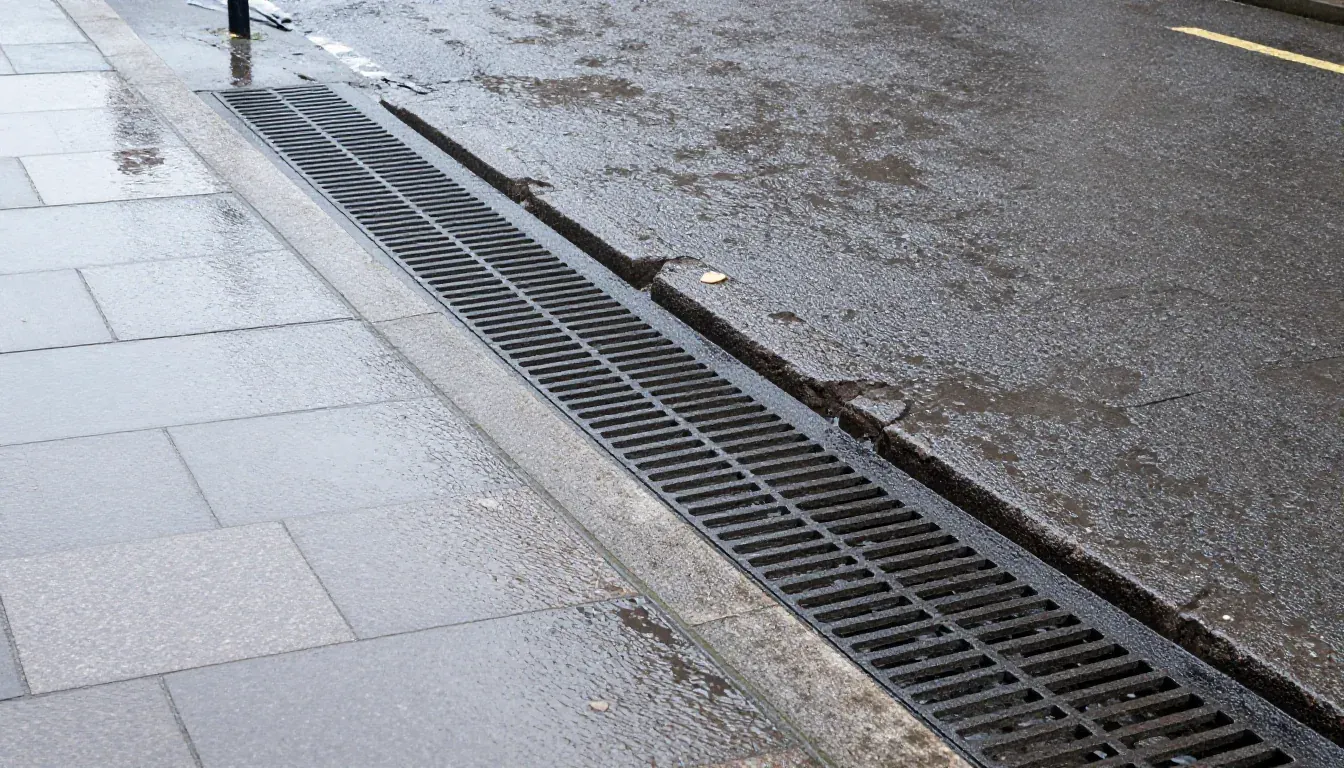
Aberdeen gets its share of heavy rain, and a downpour is often the moment a hidden drain problem shows itself. Water pools on the drive, a gully overflows, or a toilet starts to gurgle. This guide explains why it happens and what you can do about it. However, you do not need to be an expert to spot the early signs.
Why Rain Shows Up Drain Problems
A drain that is partly blocked can cope with normal use. When the rain arrives, the extra water has nowhere to go. The partial blockage then becomes a full one.
Rain also adds water from places that do not normally send much. For example, a wet roof sends hundreds of litres to the downpipes within minutes. Roofs, driveways and patios all feed into the system at once. That sudden load tests every pipe, joint and gully.
Gullies Clogged With Leaves and Grit
Outside gullies catch surface water from yards, paths and downpipes. Over time, they collect leaves, moss, grit and silt. A gully with a thick layer of debris cannot take much water before it overflows. As a result, the water runs across the surface instead.
This is common in autumn, when leaves fall into every drain. Checking and cleaning your gullies is one of the simplest jobs you can do. Our post on winter drain care in Aberdeenshire covers the routine in more detail.
Old and Combined Drainage Systems
Some older properties have combined systems, where rainwater and foul waste share a pipe. In heavy rain, these pipes fill quickly and may back up. Older pipes may also have cracks or sunken sections that hold water and debris. Therefore, a heavy storm finds every weak spot.
Tree roots can make this worse. They find their way into joints and narrow the pipe, so less water passes through. A camera survey shows whether this is happening, and our guide to what a CCTV drain survey shows explains what to expect.
Ground Water and Damaged Pipes
When the ground is saturated, water can seep into a cracked pipe from outside. This adds to the flow and can carry soil into the pipe. Over time, that soil builds up and causes a blockage or a dip in the pipe.
Signs include a drain that only slows down after rain, or damp patches near the pipe route. While one wet day proves little, a repeating pattern deserves attention. If you see this pattern, the pipe may need a repair. Our drain repairs page explains the options.
What to Check Yourself
Before you call anyone, a few simple checks can help:
- Look at nearby gullies and clear any visible leaves, but wear gloves.
- Check that downpipes and gutters are not overflowing onto the drain.
- Lift a manhole cover only if it is safe, and look for standing water.
- Note whether the problem happens only in rain.
- Avoid running taps, showers or the washing machine while the drain is full.
Never open a manhole if you feel unsure, because the cover is heavy and the chamber is a hazard. Our signs of a blocked drain guide lists other symptoms to look out for.
When to Call a Drainage Engineer
However, you should call us if water keeps rising, if sewage appears, or if several fixtures back up at once. These signs point to a blockage in the main run. Our emergency drain service is available 24/7 for urgent cases.
For ongoing problems, drain jetting can clear silt and debris from the full length of a pipe. For stubborn problems, a blocked drains visit will find the cause. Our post on what affects drain unblocking cost explains how a quote is built. If you live in a flat, our guide to tenement drain responsibility shows who should act. You can also read our advice on emergency drain problems while you wait.
Local Help Across Aberdeenshire
Since we work across the whole area, we cover Stonehaven, Portlethen and Peterhead, where coastal weather can bring heavy downpours. Our Stonehaven team, our Portlethen engineers and the Peterhead crew all work to fixed pricing with no call-out fee.
Request a free quote online through our contact page. We will help you stop the next downpour causing trouble.


